Fear-Based Leadership
What Ottoman Sultans and Your Boss Have in Common

When our guide walked us through Istanbul, he kept his voice low when discussing politics. Instead of saying President Erdogan’s name, he called him “the tall man.”
“I don’t want to talk about politics because of the secret police,” he explained.
I spent the next three days thinking about that whisper. Not what he said—but why he had to whisper it.
This is what authoritarianism sounds like. Not the Hollywood version with jackboots and tanks. Not the Lord of the Rings version with enemies clearly distinguished by their sewage-looking skin. The everyday version where people lower their voices and self-censor, where a tour guide in a republic won’t say the president’s name.
But let me back up. Because the guide started our tour with an announcement:
“Welcome to Istanbul! This city has been called many things—Byzantium, Constantinople, and now Istanbul. In 1923, after the fall of the Ottoman Empire, Turkey became a republic under Mustafa Kemal Atatürk.”
He proudly announced Turkey was a republic. But later, when he whispered about “the tall man” and secret police, I couldn’t help but whisper to Honey,
“Replacing the president’s name? Doesn’t sound very republic-y.”
Honey nodded curtly in Albanian.
As we walked through Istanbul, I reflected on fear-based leadership as I heard the stories and culture. Fear-based leadership never works out well, and yet, we are seeing it still normalized to this day, often under the guise of “strength” or what “real men” do…even though it ends up harming all the men (and everyone else) who aren’t the leader.
Authoritarian leadership requires fear. And authoritarian leadership—whether in governments or workplaces—only works if we participate in our own silence.
And the moment people stop being quiet? The system breaks.
The Dome That Kept Falling Down
Let’s discuss leadership in this massive, history-rich city.
The number one site I wanted to see was the Hagia Sophia, a building built as the head of the Eastern Orthodox church, converted to a mosque, then a museum, and now a mosque again. In middle school, I did a project on it. I didn’t remember shit, but I wanted to see the real thing.
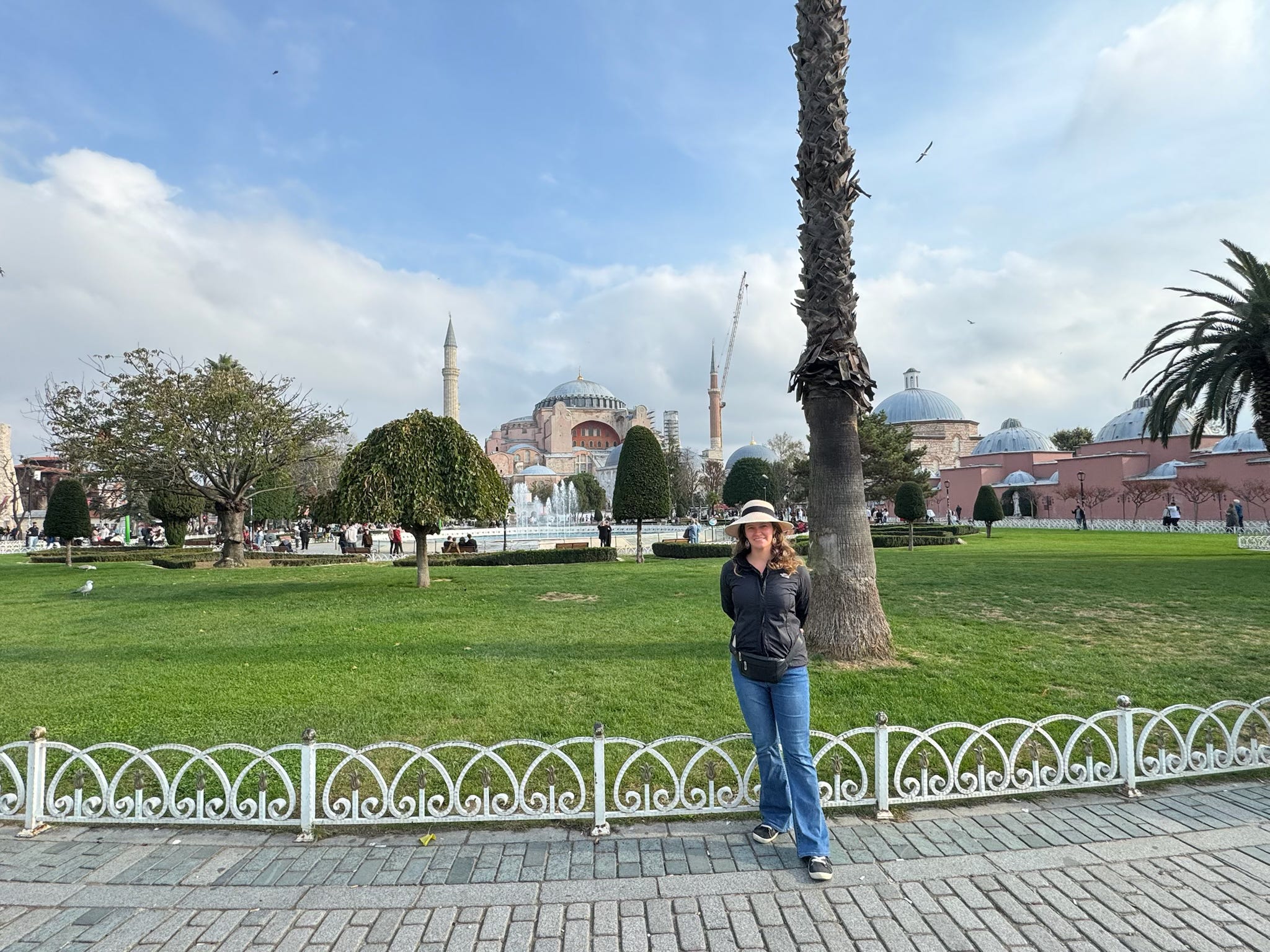
The Hagia Sophia is known for its massive dome, sometimes referred to as the eighth wonder of the world, but it did not happen instanteously. It required trial and error. The original dome collapsed in 558 CE, just 21 years after Byzantine Emperor Justinian I finished building it. They rebuilt it. It collapsed again in 989 CE. The third time was the charm. The architects troubleshot how to ease the weight of the large dome by adding windows around its base.
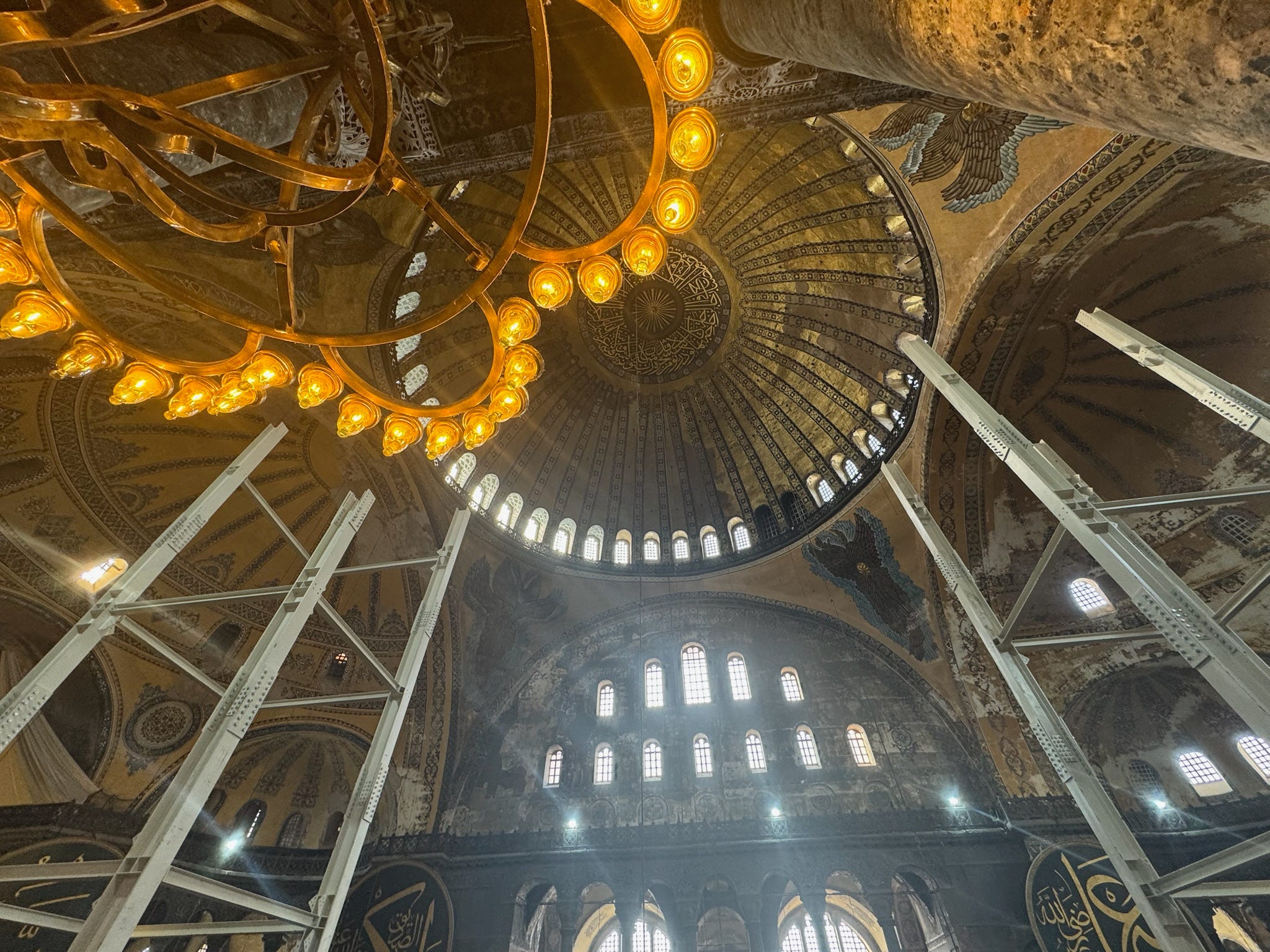
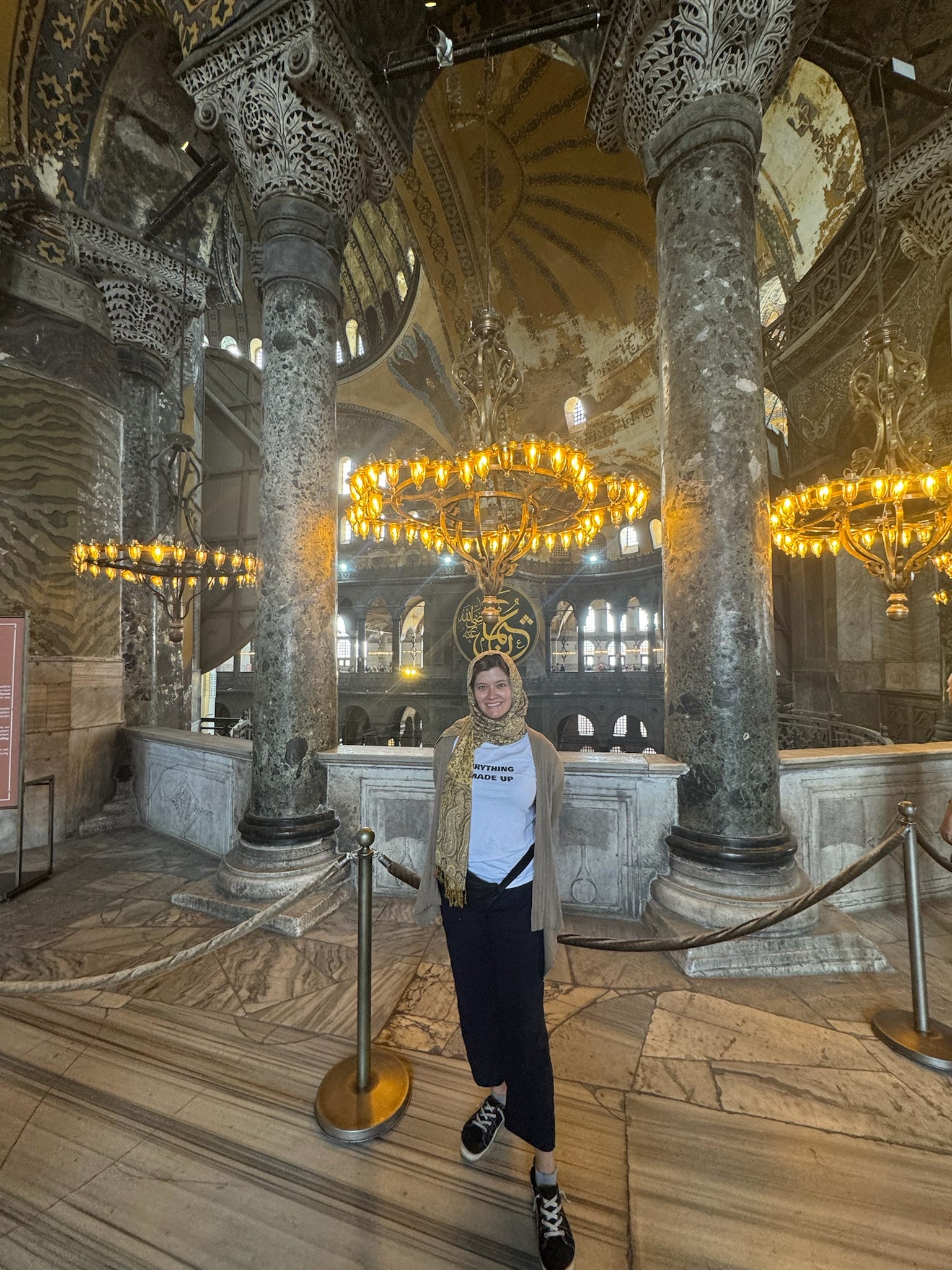
Note, they didn’t rebuild the thing the same way every time. They learned from the failures. Something that we’d think would be common sense, but as you’ll read in my book (now available via ebook)…we haven’t been so great at that in business…
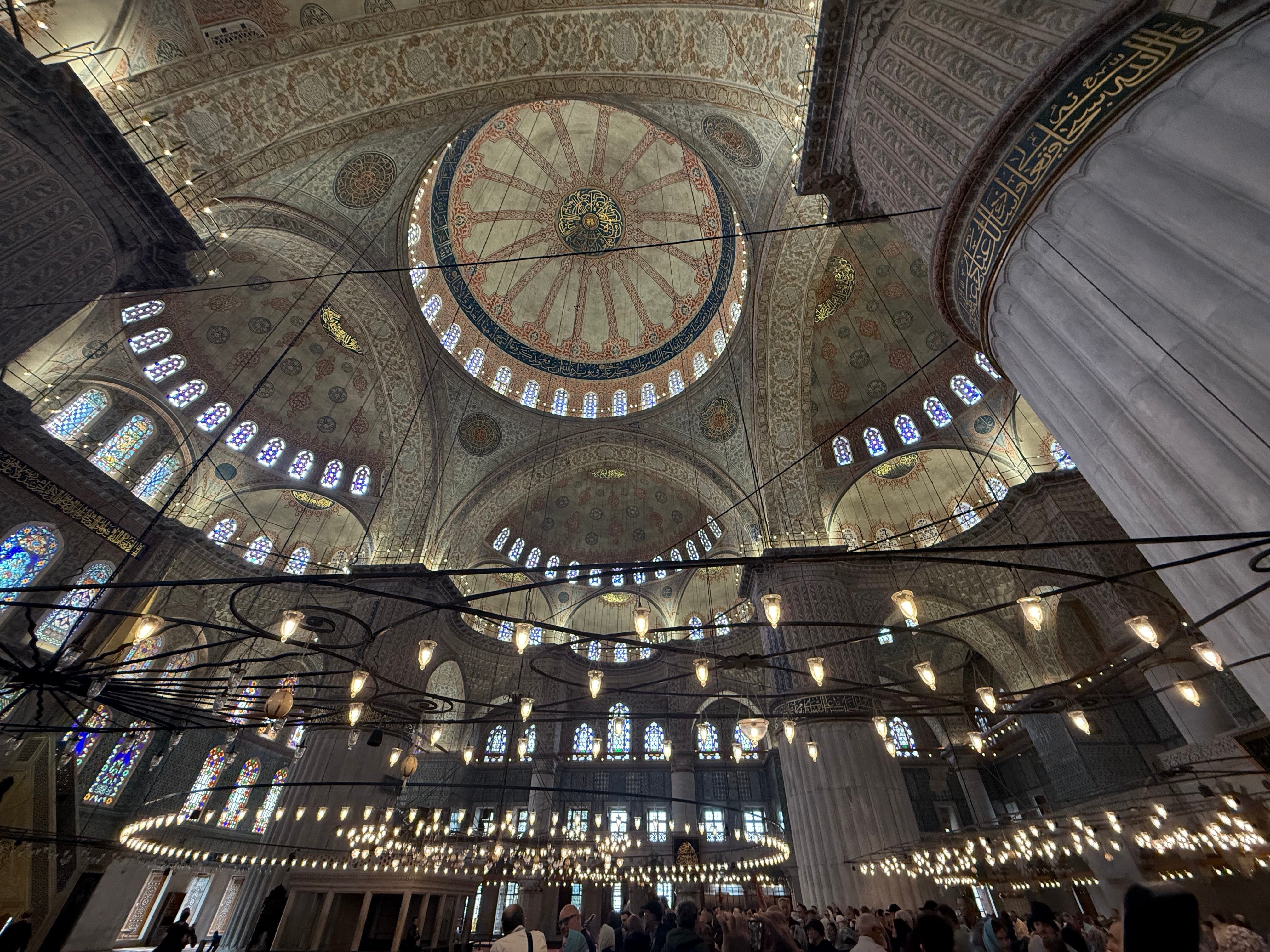
Fast forward to 1609-1616, when Sultan Ahmed I commissioned the Blue Mosque, which is across the plaza from the Hagia Sophia. The architect, Sedefkar Mehmed Agha, studied the Hagia Sophia’s design and built something even more ambitious—a mosque with six minarets and a dome that still stands today, over 400 years later
Our guide pointed this out: “They learned from the mistakes. That’s how they built it so well.”

Here’s what I immediately thought: You can’t learn from mistakes if you’re afraid to admit you made them.
And you can’t admit mistakes when your boss might kill you for it. Literally.
“For the Common Good”: When Brothers Had to Die
Our guide walked us to a small building in between the Hagia Sophia and the Blue Mosque.
“If you peek inside, you’ll see many coffins. Even very little ones,” he said. “This is because every time someone became a king, all of the other men in the family had to be killed, even young nephews.”
Say what now?

Yes, this practice, called fratricide, is a vile product of fear-based leadership. The “leader” is so afraid that he will be overthrown, or another male member will be perceived as a better possible king, that he murders all of his relatives to secure his right to the throne.
This fear wasn’t completely unfounded within a toxic system. During early Ottoman empire days, every male member of the ruling dynasty had an equal right to the throne. The state was considered “common patrimony of the dynasty”—meaning any son could claim it.
This caused civil wars. Constantly.
The worst was the fatrah—an 11-year period (1402-1413) where four of Sultan Bayezid I’s sons fought for the throne, “involving thousands of others”. The empire nearly collapsed.
So Sultan Mehmed the Conqueror did something radical. Around 1453, he issued a law code:
“Fratricide, for nizām-i ‘ālem (the common benefit of the people), is acceptable for any of my descendants who ascends the throne by God’s decree. The majority of the ulemā permits the fratricide.”
Yes, a rich man decided that instead of sharing power, you could kill your brothers and nephews. Reasonable right? That’s “just logic.”
Between the 14th and 18th centuries, approximately 60 princes were executed, with most of them—44 princes—killed in the 16th century alone. The peak? Sultan Mehmed III executed 19 of his brothers when he took the throne.
Nineteen.
Think about the logistics of that for a moment. Nineteen executions don't just happen. Someone had to strangle each prince. Someone had to order it. Someone had to justify it. Someone had to enforce it. Someone had to accept it as normal. That's not one person's brutality. That's a system. And every authoritarian system—whether Ottoman, American, or corporate—follows the same playbook:
The Authoritarian Playbook
This is the authoritarian playbook, whether we’re talking about sultans or CEOs:
Create or amplify fear (civil war will destroy us / our company will fail)
Present extreme measures as necessary (we must kill potential rivals / we must cut 30% of staff)
Get authorities to legitimize it (religious scholars issue fatwas / shady consultants write reports)
Frame it as “for the common good” (nizām-i ‘ālem / “business necessity”)
Punish dissent (even suggesting alternatives is dangerous / “you’re fired”)
Require participation (everyone must comply or face consequences)
Psychologist Bob Altemeyer spent decades researching what he calls authoritarian patterns—not a political label, but personality traits that emerge in both leaders and followers. His research identified three key characteristics of authoritarian followers:
High submission to established authorities
High aggression in the name of those authorities
Rigid conventionalism, defined as a strong acceptance of and commitment to the traditional social norms, values, and beliefs endorsed by society and its established authorities.
(Rigid conventionalism….hmm…that sounds like…a strong adherence to unwritten rules….)
Here’s the crucial finding: Authoritarian followers score highly on what Altemeyer calls the “Dangerous World” scale. They are, in general, more afraid than most people. And that fear is weaponized.
Fear combined with self-righteousness releases authoritarian aggression: “authoritarian followers feel empowered to isolate and segregate, to humiliate, to persecute” when they believe they’re acting for the greater good.
Sound familiar?
When Excellence Becomes a Threat
Think about what this means for learning from failure.
The fratricide system wasn’t about punishing princes who spoke up or disagreed. It was about eliminating anyone who could become a rival—whether they wanted to or not.
If you were a prince, you were a threat simply by existing. You had “royal blood.” You could rally supporters. Even if you had zero interest in the throne, even if you were loyal, you were dangerous.
Around authoritarian leaders, potential is punished. Excellence is a threat.
This is something I hear constantly from coaching clients: “I’m excellent at my job. I exceed every metric. I do everything right. But my boss still doesn’t like me. Why?”
Because your boss sees you as a replacement, not a resource.
In authoritarian systems—whether Ottoman palaces or modern offices—power can’t be shared. It can only be held by one. Your competence doesn’t make you valuable; it makes you dangerous. Especially if you come from an underrepresented group. Then your existence also threatens the authoritarians sense of why they are so great. “Someone WITHOUT royal (wealthy, white, neurotypical, male, citizen, etc.) blood could do what I do?! Then I’m not special!”
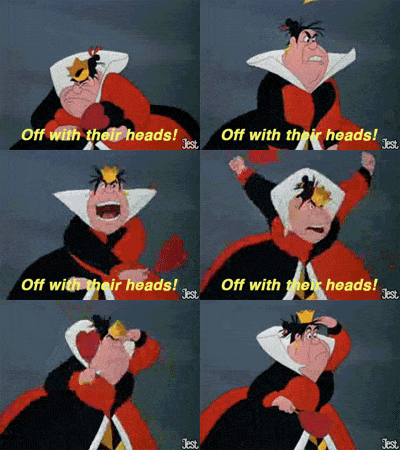
The fratricide system made this explicit: princes were executed not for what they did, but for what they could do. Their capability was the crime.
By the 17th century, the Ottomans had shifted from executing princes to imprisoning them. This was to keep them from still commanding power and gaining love of the people. The result? As our guide said: “Paranoid men who didn’t know anything about the world were put in power.”
Can you imagine that?

One sultan, our guide said, “lost their marbles, killed many people because easily threatened.”
For example, Sultan Ibrahim I ("the Mad") spent most of his life confined to the Cage. He developed severe paranoia and mental instability from the isolation. At one point, he "ordered his entire harem be tied into weighted sacks and drowned.” Sultan Murad IV, caged at age six, became known for his brutal rule. He banned alcohol, coffee, and tobacco—and would "don civilian clothes and patrol the city at night. If he spotted a person consuming these substances, he would behead them on the spot."
They had no idea how the world worked, experience with healthy conflict, or any soft skills. Anything and thus everything was a threat.
The last Ottoman Sultan, Mehmet VI, spent 56 years in confinement before being called out to rule in 1918. By then, the empire was already dying. The Ottoman Empire didn't end because they fixed the Cage system. It ended because they lost World War I. As an American, obviously I’m glad World War I was in our favor; however, do we have faith that the Ottoman Empire would have made the same decisions if their leaders hadn’t been isolated mad men?
After the Armistice of Mudros on October 30, 1918, Allied forces occupied Constantinople (Istanbul). On November 1, 1922, the Turkish Parliament formally abolished the Sultanate, ending 623 years of monarchical Ottoman rule. On October 29, 1923, the Republic of Turkey was officially proclaimed.
Here's what struck me about those caged princes: It wasn't the luxury that destroyed them. It was the isolation. They had everything money could buy—art, music, concubines, comfort. What they didn't have was contact with reality. With how the world actually worked. With people who would tell them the truth. Sound familiar?
We don't lock our leaders in cages anymore. We isolate them with wealth. As one writer put it in analyzing modern billionaires: "The proportional difference between $1000 and $1m is the same as a $1m and $1bn. The difference between a million dollars and a billion is about a billion dollars. At those heights, everything looks ridiculous."
If Warren Buffett saw $10,000 on the floor, it proportionally wouldn't be worth his time to bend down and pick it up. "How could $1,000 extra actually ever be life-changing? That's not even pocket change." When you can't relate to people's problems, you can't lead them effectively.
As the researcher behind the Unwritten Rules of Work based on social class, my research has found that you cannot disagree with people as you move up in your work environment. I see this in my coaching practice constantly. Clients tell me: "My CEO asks for my opinion and expertise but punishes me when I answer, even if it would save him from a major accident or lawsuit! He has no idea what it's like on the ground.”
Fear runs in both directions here. Employees are afraid to tell leaders the truth because they’ll be punished. But leaders are also afraid—afraid of being wrong, afraid of looking incompetent, afraid someone else might be better than them. So they punish anyone who threatens that fragile sense of superiority.
Remember: around authoritarian leaders, excellence is a threat. They're surrounded by people who let them win at games because nobody wants to shatter a fragile ego or risk their job.
In my YouTube video on corporate vs. Asian indirectness, I talked about how a former Meta executive shared that Mark Zuckerberg didn't realize everyone let him win when they played games with him.

He had no idea because people didn't disagree with him to that point. Once you've been successful, people stop giving you honest feedback—both out of fear and because they think you've "cracked the code." This is the modern version of the Cage: fear creates isolation for leaders. Employees fear retaliation. Leaders fear being exposed as less-than-omniscient. The result? Nobody tells the truth.
As Adam Grant documents in his book Originals: once you've been successful, people stop giving you honest feedback—both out of fear and because they think you've "cracked the code." In Steve Jobs’ case, the Segway was supposed to revolutionize transportation. Investors poured over $100 million into it. Steve Jobs, renowned for his intuition in computing, was convinced it would change the world. It became one of the ten greatest technological failures of the decade.
Why was Jobs wrong? Grant identifies three reasons:
1. Lack of experience in the field: Jobs's intuition was often accurate in computing, but not in personal transportation. "When you don't know anything, intuition is useless." (And a Dr. K reminder…NOBODY can know EVERYTHING.)
2. Arrogance from past success: Success breeds overconfidence, making us less likely to seek opposing viewpoints. (Sounds like where that unwritten rule of Compliance comes from…).
3. Jobs didn't check his intuition with more competent experts: Jobs "didn't even bother to check his intuition with more competent inventors." (Now wait a minute…admitting someone else is “more competent” in another field that you’ve never worked in…how could an ego ever survive?)
Again:
The cage today isn't physical. It's psychological. It's the isolation that comes when:
- You haven't heard "no" in years
- Everyone around you is financially dependent on you - Your wealth insulates you from every consequence
- You interact with "normal people" only in superior-subordinate relationships
- Your past successes make you overconfident in areas where you have no expertise
The Ottoman sultans created paranoid, incompetent leaders by locking them away from the world. We're doing the exact same thing with corner offices, private jets, and wealth that makes $10,000 not worth bending over for.
Different cage. Same isolation. Same incompetence.
The Modern Workplace Version: Fear-Based Leadership Costs $36 Billion
How common, and expensive, is this issue?
A 2023 survey of approximately 2,500 managers found that over one-third of corporate leaders are primarily motivated by fear. That’s about 1.3 million leaders in the U.S. alone operating from fear.
The cost? $36 billion annually in lost productivity.
Fear-based leaders lose an estimated 10 hours per week in productivity for their companies—about $28,750 per year per leader.
How could this cost so much money? According to Forbes, fear-based leadership has five devastating impacts:
Decreased employee morale - toxic environment where employees are afraid to speak up
Reduced creativity and innovation - afraid to take risks and make mistakes
Lack of trust - breakdown in communication
Increased stress and burnout - constantly worried about making mistakes
Negative impact on productivity - creates “a culture of compliance rather than a culture of productivity and growth”
That last one. Read it again.
A culture of COMPLIANCE rather than a culture of growth.
The Ottomans, meet modern corporate America.
Real Examples of Corporate Authoritarianism
Forbes documents a real case where a new leader arrived and immediately made the below statements. Do these sound “normal” or “problematic” to you? Or worse…both?
“I was hired to do a job; I have no loyalty to any of you.”
“Your department is broken beyond repair. Why do we need it?”
“There is a reorganization on the horizon; do what you feel with that information.”
“Your role may remain, or may not. You will have to wait and see.”
“Every day, log your tasks for the entire business unit to see.”
Did you catch the red flags? Or did part of you think, "Well, that's just how business works sometimes. Leaders have to make tough decisions. This is just being direct and holding people accountable."
Let me translate what was actually said:
- "I have no loyalty to you" = You are expendable. I owe you nothing.
- "Your department is broken beyond repair" = Your work has no value. Even though I plan to make money off of it and I was hired to lead you.
- "Do what you feel with that information" = Live in fear. I'm not clarifying because uncertainty keeps you compliant.
- "Your role may remain, or may not" = Constant threat. Constant performance of your worth.
- "Log your tasks for everyone to see" = Surveillance. Prove daily that you deserve to survive here.
This is corporate fratricide without the strangling cord. And here's the thing: The organization lost incredible talent. The coach documenting this case advised her client to leave. Forbes presented this as a cautionary tale about fear-based leadership. But how many of us would have recognized these statements as red flags in the moment? How many of us have heard similar things and thought, "That's just how it is at this level"? This is how authoritarianism sneaks in. It sounds like "strong leadership." It sounds "professional." It sounds like "shaking things up."
But here’s what’s chilling: This pattern is rising.
Research shows that nearly 40% of fear-based leaders strongly believe that stress can be positively harnessed in workplaces. They see fear as a management tool, not a crisis.
The Cost When People Comply
When employees are forced to operate in fear-based environments, they don’t just quit (though many do). They engage in what researchers call Counterproductive Work Behaviors (CWBs):
Taking longer breaks than allowed. Doing work incorrectly on purpose. “Forgetting” to respond to emails. Cyber-loafing. Sabotage.
Research shows employees engage in CWBs when they:
Perceive organizational injustice
Experience high workplace stress
Feel their psychological contract was breached
Have low-quality relationships with leadership
This is what happens when you can force compliance, but you can’t force buy-in.
Without Followers, Tyrants Are Just Crazy People on Soapboxes
Here’s the most important thing I have learned in my leadership studies: Without followers, authoritarian leaders are just insane men screaming on soap boxes. They have no power until we provide them a pulpit and believe what they tell us.
The sultans couldn’t kill their brothers themselves.
They needed:
Executioners to strangle princes
Viziers to bring princes forward
Ulemā (religious scholars) to justify it with fatwas
Soldiers to not revolt
Palace staff to comply
The moment any group refused to participate, the system broke.
As I wrote in my post about religious syncretism and workplace culture:
“Leaders are powerless without followers. The British couldn’t have stripped that mosque’s ceiling without Egyptian hands doing the work. The conquerors couldn’t have erased the old gods without the conquered people wielding the chisels.”
“And in your workplace? Cultural imperialism only works when people comply. When they perform. When they manufacture smiles they don’t mean... The system runs on your participation. And that means you have more power than you think.“
Altemeyer puts it this way in The Authoritarians:
“We shall probably always have individuals lurking among us who yearn to play tyrant... But ultimately, in a democracy, a wannabe tyrant is just a comical figure on a soapbox unless a huge wave of supporters lifts him to high office... Ultimately the problem lay in the followers.”
Your fear-based boss needs:
You to accept impossible standards
You to manufacture emotions you don’t feel
You to stay silent when you see problems
You to believe “this is just how it is”
You to participate in your own cage
Without your participation, they’re just someone yelling demands into the void.
Breaking Free: What To Do?
1. Recognize the Warning Signs
The rise in authoritarian leaders is consequently not just a problem among the elite. It is among all of us. We must recognize these signs and refuse to fall for the narcissistic facade.
But not all demanding leaders are authoritarian. Not all crisis management is fear-mongering. So how do you tell the difference?
Altemeyer’s research included scales where authoritarian leaders described themselves anonymously—what they called the “Power-Mad” and “Exploitive-MAD” scales. These leaders openly admitted to being manipulative, dishonest, ruthless, and amoral when they thought no one could identify them.
Here’s how to spot authoritarian exploitation versus actual leadership:
HOW THEY TALK ABOUT THREATS:
Authoritarian pattern: Constant crisis. “Society is collapsing.” “Everything is dangerous.” Fear is amplified and kept high.
Actual leadership: Addresses real threats with context and realistic solutions. Doesn’t unnecessarily amplify fear. Distinguishes between urgent and important.
THEIR RELATIONSHIP TO POWER:
Authoritarian pattern: As they say themselves: “Winning is not the first thing; it’s the only thing”. Power for power’s sake. “I want a great deal of power, making decisions that affect thousands.”
Actual leadership: Power as means to accomplish goals. Willing to share and distribute authority. Develops others’ leadership capabilities.
HOW THEY TREAT MISTAKES:
Authoritarian pattern: Punish mistakes harshly. Create climate where people hide errors. No learning allowed—the dome must never fall.
Actual leadership: View mistakes as learning opportunities (like the Hagia Sophia architects). Create psychological safety for intelligent failure.
DOUBLE STANDARDS:
Authoritarian pattern: Research shows they apply different standards to in-groups vs. out-groups. Rules for thee but not for me.
Actual leadership: Consistent principles applied evenly. Transparent decision-making. Same expectations for everyone.
HONESTY VS. MANIPULATION:
Authoritarian pattern: They admit anonymously: “Tell people what they want to hear.” “There’s no excuse for lying to someone else” (Disagree). “The best way to handle people is to tell them what they want to hear” (Agree).
Actual leadership: Honest even when difficult. Consistent between public and private statements. No hidden agendas.
EMPATHY:
Authoritarian pattern: “I don’t spend a lot of time feeling sorry for people less fortunate than me.” “I have a ‘tough’ attitude toward people having difficulty: ‘That’s their problem, not mine.’”
Actual leadership: Shows genuine concern for team members’ wellbeing. Considers impact on people, not just outcomes.
LOYALTY DEMANDS:
Authoritarian pattern: Demands complete loyalty but offers none. “I was hired to do a job; I have no loyalty to any of you.” “They want their followers to be super loyal to the group they lead. But they themselves are not really in it so much for the group or its cause, but more for themselves.”
Actual leadership: Mutual loyalty. Earns trust through consistent behavior. Values team welfare alongside goals.
HOW THEY HANDLE DISSENT:
Authoritarian pattern: Eliminates rivals. Punishes alternative viewpoints. Creates surveillance. “Your role may remain, or may not.”
Actual leadership: Welcomes constructive challenge. Creates space for disagreement. Rewards people who identify problems.
RELIGIOUS OR MORAL FRAMING:
Authoritarian pattern: Uses religion/morality as tool for control while acting immorally. “Double Highs” score high on both dominance AND religious fundamentalism—they’re “religious” social dominators. “The best reason for belonging to a church is to project a good image.”
Actual leadership: Lives stated values. Integrity between words and actions. Doesn’t weaponize morality.
DURING CRISIS:
Authoritarian pattern: Amasses more power. Eliminates checks on authority “for safety.” Altemeyer found “some authorities will gladly amass greater power in times of peril, whether they have any intention of fixing the problem or not”.
Actual leadership: Transparent about challenges. Maintains democratic processes even when difficult. Doesn’t use crisis to consolidate control.
The pattern to watch for: If every crisis requires more control, less accountability, and punishment of dissent—that’s not crisis management. That’s authoritarianism.
2. Document Everything
Keep records of fear-based tactics—emails, messages, conversations where threats or coercion occurred.
Pay special attention to:
Threats (explicit or implied)
Loyalty tests - Punishment for speaking up
Double standards in action - Manipulation or dishonesty
3. Build Your Own Support
Find your people. Seek support from colleagues experiencing similar treatment. You validate each other's reality and can act together more effectively. Remember: Authoritarian leaders rely on isolation. When people talk to each other, patterns become visible.
4. Learn How to Have Courageous Conversations
The only way to break authoritarian patterns is to stop participating in the silence. But that requires knowing how to speak up effectively, build alliances, and create support systems, even with peopel who disagree with you. In my Skool Community, you’ll find likeminded people, but you’ll also find my course on “How to Have Courageous Conversations" with the Cycle of Fear vs the Cycle of Courage step-by-step frameworks. Additionally, weekly live coaching calls where we unpack the unwritten rules together - A community of people who get it and are navigating the same patterns.
5. GTFO
Sometimes the answer is to leave. As I wrote in my Belly Dancing and Billionaire Bunkers post, “When leaders break the social contract—when they hoard resources while demanding sacrifice—the trust is broken.” Even Forbes stated, "No job is worth enduring constant fear and intimidation." But before you leave, ask: Can I document this? Can I report it? Can I help others see the pattern? Because every person who names the pattern makes it harder for the next authoritarian leader to operate.
The Question
As my book launch has come closer, I’ve been reflecting more and more on how there will always be people who take advantage of unwritten rules. What matters is that the rest of us start to recognize the warning signs of these exploiters before it’s too late. We must stop seeing them as leaders. Otherwise, they’re just insane people screaming in YouTube comments.
Fear-based leadership ends when we stop manufacturing the fear they need to survive. What kind of leader do you want to be? And more importantly: Which systems are you participating in that you don't actually believe in?
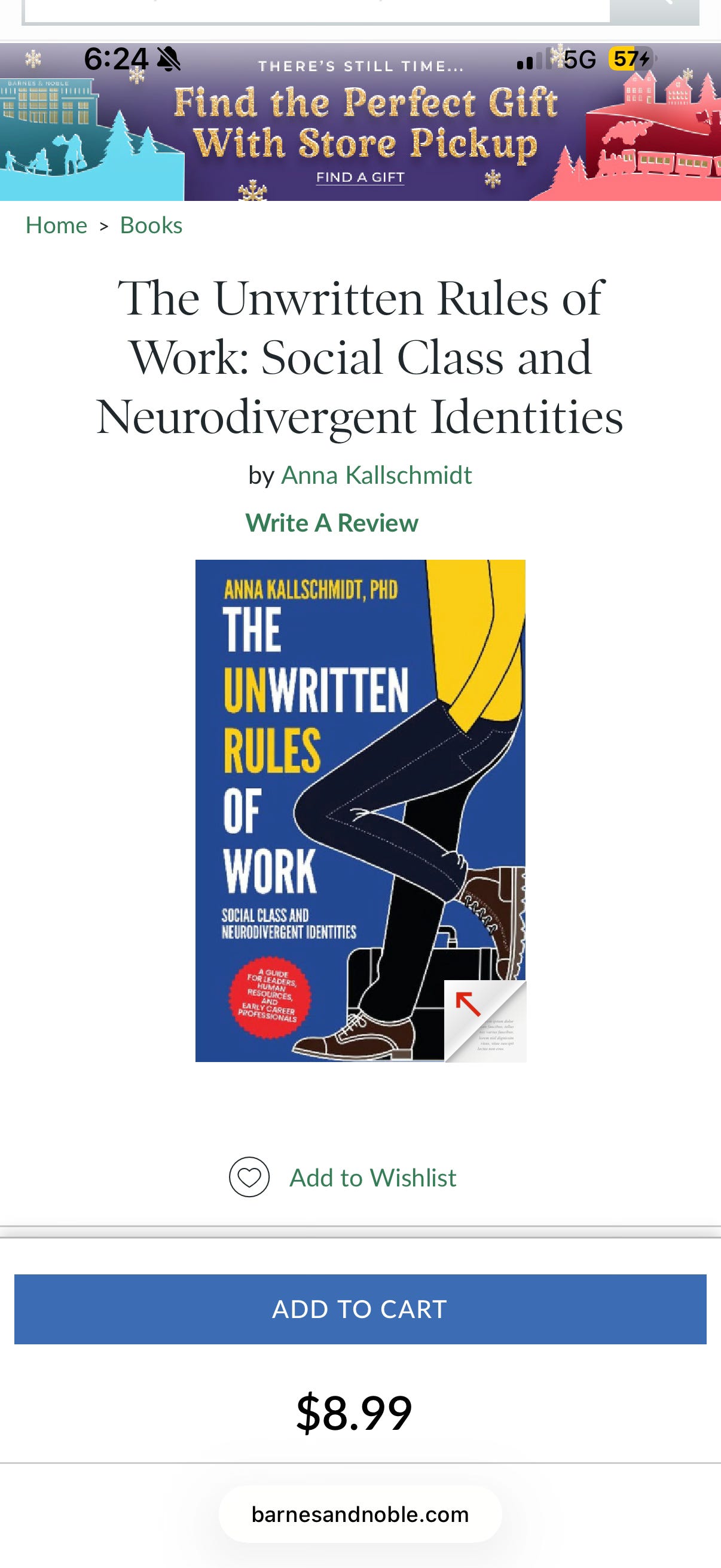
Want to learn all the unwritten rules—including how to navigate Compliance culture without sacrificing your integrity? My book, The Unwritten Rules of Work is now available in ebook format. Each chapter covers an unwritten rule and recommendations for staff, leaders, and HR. Because we aren’t getting out of this by pointing fingers at each other. We have to hold others accountable while also doing our part.
Somebody cooked here. 🤔 I followed you from TT I love this explainer. This may also be what is timing the Democrats we already know about the Rethugs.